
10 Best Museums in Mérida Mexico: A Local Insider’s Guide
A note before we dive in: hours and admission prices in Mérida change often, so treat everything below as a starting point and confirm before you go. All peso amounts are approximate.
Steeped in Mayan culture and colonial history, Mérida is the only city to receive the prestigious Cultural Capital of the Americas designation twice — and its museums are a big part of why. If you’re researching things to do in Mérida Mexico, the best museums in Mérida Mexico should be near the top of your list. From Mayan artifacts and colonial palaces to opulent henequen-era mansions, here’s my local insider’s guide to the ones I think are actually worth your time.
Conde Nast Traveler has called Mérida “The World’s Best Small City” — a colonial gem in the Yucatán Peninsula with colorful streets, colonial architecture, and rich Maya history. Having lived here for years, I’d add that you can’t really understand the city from the outside. The museums are where Mérida’s layered story — Maya, Spanish colonial, henequen-era, modern Yucatecan — actually starts to click.
📌This article was originally posted on April 8, 2020 and has been updated in 2026 for current information and our best suggestions.
A brief history: why Mérida’s museums matter
Mérida was built on the site of an ancient Maya city called T’ho, which was considered the center of Maya culture for centuries. Maya society here goes back nearly 2,500 years before the Spanish conquest, with a complex hieroglyphic writing system developed toward the end of the Pre-Classic Maya period. Some historians consider Mérida the oldest continually occupied city in the Americas — the Spanish literally used carved Maya stones from T’ho to build their colonial buildings.
When Spanish Conquistadors arrived in the early 16th century, they found a thriving Maya settlement with limestone temples and pyramids reminiscent of the old Roman city of Mérida back in Spain. Centuries later, in the late 19th century, plantation owners began producing henequen — known as “green gold” — on a mass scale, and for a brief, dazzling period Mérida was home to the greatest concentration of wealth in the world. The handful of families who controlled the henequen industry sent their children to Europe to study and hired Parisian architects to build opulent villas along Paseo de Montejo, modeled after the Champs-Élysées.
You’ll see all of those threads — Maya, colonial, and henequen baron — woven through the museums below.
Best Mayan museums in Mérida
If you only have time for one category, make it this one. The Mayan museums in Mérida are what make the city genuinely unique.
Mérida City Museum
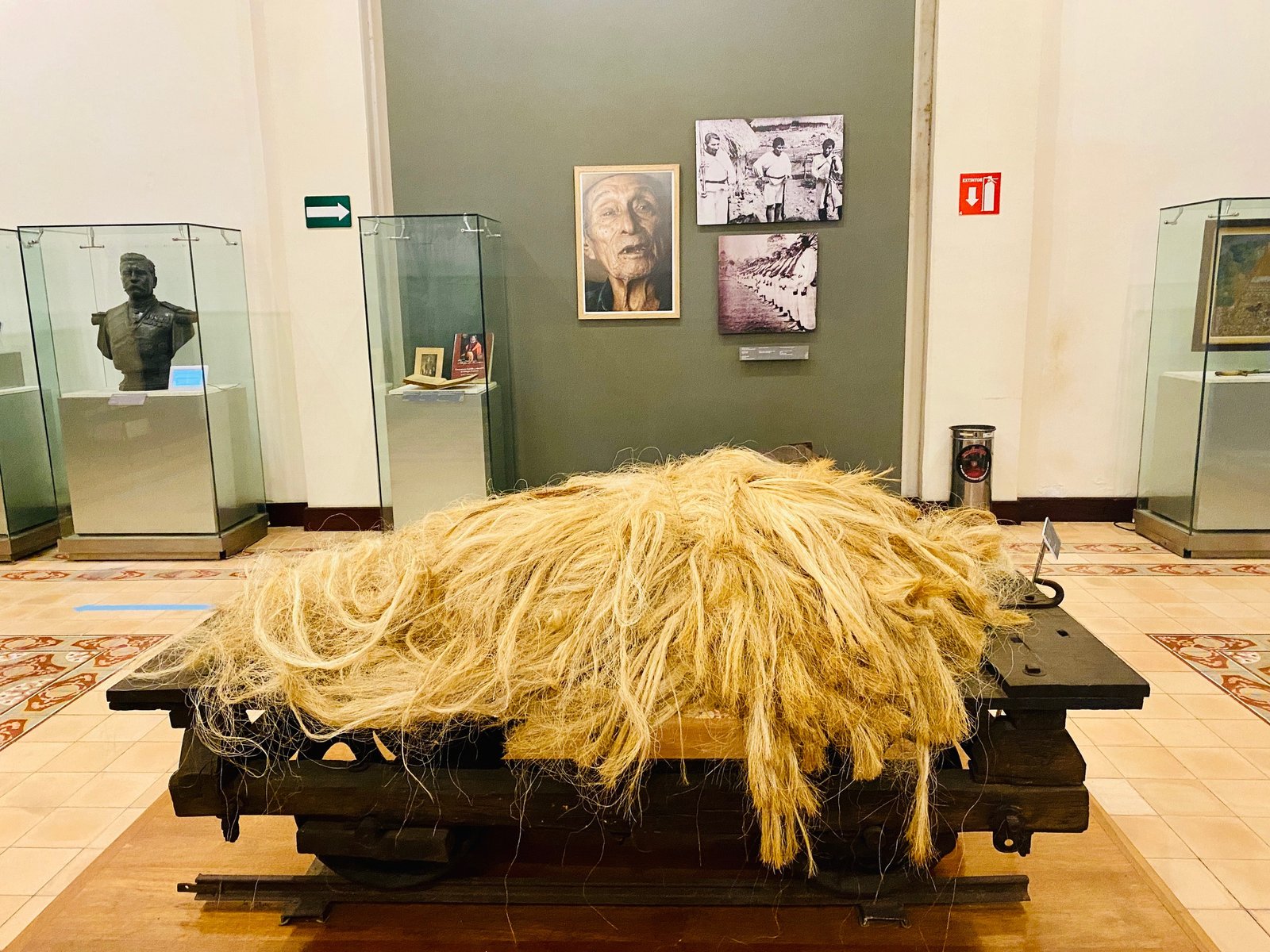
The Mérida City Museum is where I’d send a first-time visitor who wants context before exploring anywhere else. It houses a large collection of archaeological pieces from pre-Hispanic to modern times, including information about T’ho and maps and pictures of early Mérida. The exhibits explain how the streets of the city were named and navigated over time — a small detail that completely changes how you walk around Centro afterward.
You’ll find Mayan pottery, tools, jewelry, and gifts alongside post-colonization paintings, altarpieces, clothing, and weapons.
- Location: Calle 56 #529A x 65 y 65A
- Hours: Tuesday – Friday, 9:00 am to 6:00 pm; Saturday – Sunday, 9:00 am to 2:00 pm
- Admission: Free
El Gran Museo del Mundo Maya
The Mayan World Museum is the heavyweight — and it’s a must if you’re interested in Maya civilization. Textiles, religious objects, ancient engravings, books, historical documents, pre-Hispanic stelae, bas-reliefs, stone sculptures, ceramic vessels, and gold, jade, and shell ornaments are all on display.
Here’s what makes it special: the museum’s design is based on Maya cosmogony, structured on three levels — sky, earth, and underworld. The architecture itself pays tribute to the great ceiba tree, which the Maya considered sacred.
The folk art collection that used to live at the old Museo de Arte Popular now calls this place home too, so you’ll find indigenous pottery, textiles, embroidery, and folk representations of mythological figures like Aluxes and Alebrijes under the same roof.
- Location: Calle 60 Norte No. 299E
- Hours: Wednesday – Monday, 9:00 am to 5:00 pm
- Admission: $
Paseo de Montejo museums: henequen-era mansions
The Paseo de Montejo museums are where you’ll feel the weight of Mérida’s henequen boom. The fortunes those families spent on European furniture, tiles, and crystal are still right there on display — it’s a kind of wealth that’s almost difficult to picture until you’re standing in it.
Palacio Cantón Anthropology Museum
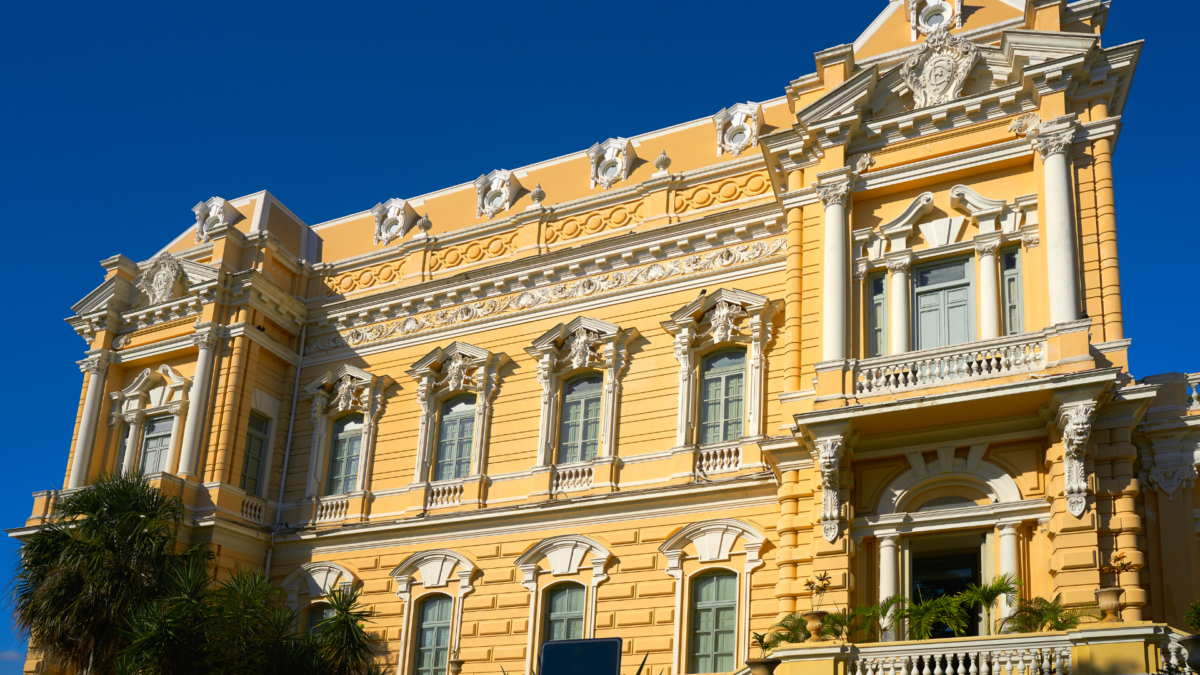
Palacio Cantón is arguably the most photographed of the Paseo de Montejo mansions, with its majestic French-style architecture. It was once the home of General Francisco Cantón Rosada and now houses the Anthropology Museum. You get both experiences at once: a peek into henequen-era opulence and a solid archaeological collection.
- Location: Paseo de Montejo #485 x 41 y 43
- Hours: Tuesday – Sunday, 8:00 am to 5:00 pm
- Admission: $ in Centro
Montejo 495
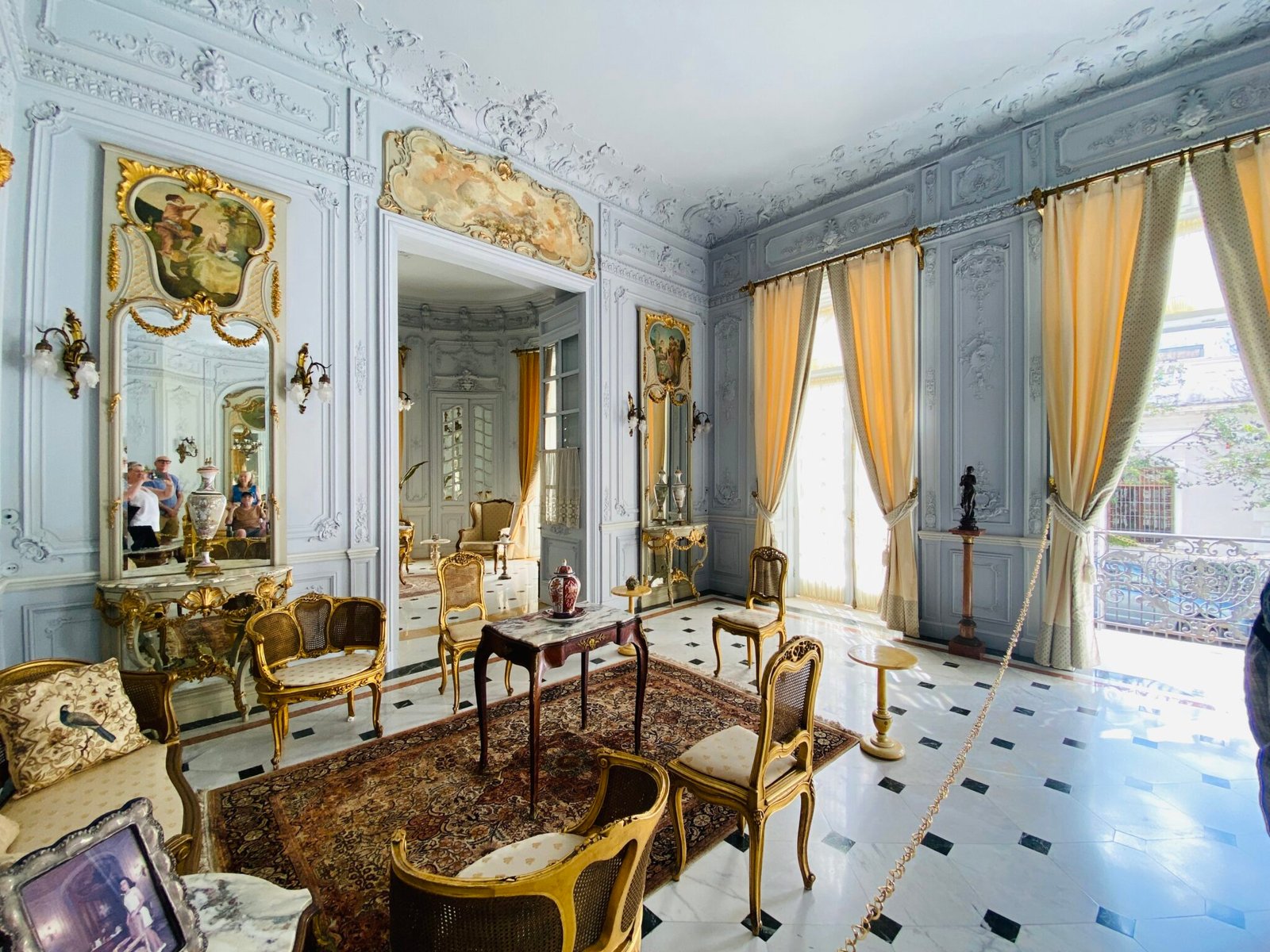
One of the famous Casas Gemelas on Paseo de Montejo, this privately owned home is now a museum on the grandest scale, with the original design, decoration, and details beautifully preserved. Designed by French architect Gustave Umbdenstock and built between approximately 1910 and 1913, it’s the kind of place where you can almost hear the dinner parties.
Fun piece of trivia the guides love to share: Jackie Kennedy visited often and apparently spent a lot of time in the kitchen.
- Location: Paseo de Montejo at the corner of Calle 45
- Hours: Thursday – Sunday, 9:00 am to 5:00 pm
- Admission: $$
Quinta Montes Molina
If Montejo 495 is grand, Quinta Montes Molina is jewel-box grand. European furniture, Carrara marble floors, Baccarat and Murano chandeliers, chime clocks, Art Deco pieces, and porcelain and alabaster sculptures fill the rooms, and the eclectic neoclassical architecture is stunning in its own right. The gardens and terraces are a real highlight — flowers, fruit trees, and a quiet that feels very far from Paseo de Montejo traffic.
- Location: Paseo de Montejo #469 x 33 y 35
- Hours: Monday – Friday, 9:00 am to 5:00 pm; Saturday, 9:00 am to 1:00 pm
- Admission: $
Museo Casa Montejo
The only example of a Renaissance-style home in Mérida, Museo Casa Montejo was built in the 16th century by Don Francisco de Montejo, conqueror of the Yucatán Peninsula. The Spanish Plateresque artistry on the facade alone is worth the visit, and four rooms on permanent display inside show off 19th- and 20th-century Mexican furnishings.
It’s right on Plaza Grande, so there’s no excuse to skip it.
- Location: Calle 63 x Calle 60 y 62
- Hours: Tuesday – Saturday, 10:00 am to 7:00 pm; Sunday, 10:00 am to 2:00 pm
- Admission: Free
The Governor’s Palace (Palacio de Gobierno)
Built in 1872, the Governor’s Palace is home to Yucatán’s executive government offices and a small tourist office — but the real draw is the second floor, where local artist Fernando Castro Pacheco’s murals depict the history of the Maya and their encounters with the Spanish conquistadors. They’re powerful, unflinching, and absolutely worth twenty quiet minutes.
- Location: Calle 61 between Calle 60 and 62
- Hours: Monday – Friday, 9:00 am to early evening
- Admission: Free
Hacienda museums near Mérida
Haciendas from the 17th to 19th centuries scatter the countryside around Mérida. They originated when the Spanish crown distributed land to noblemen after the conquest, starting as cattle ranches and later exploding with henequen profits. If you have a day to spare, a hacienda visit makes a wonderful day trip — you can pair either of these with our other recommendations for things to do in Mérida Mexico.
Hacienda Yaxcopoil
Hacienda Yaxcopoil is a maintained henequen plantation about 20 miles south of Mérida, and it’s my top pick if you want a real sense of what these estates were like at their peak. The Maya artifacts in the museum are excellent, and the scale of the property — livestock, henequen fields, main house — is genuinely impressive. The name means “place of the green aspens” in Maya.
- Location: 20 miles (33 km) south of Mérida on Highway 261 to Uxmal, at the 220 km marker
- Hours: Monday – Saturday, 8:00 am to 6:00 pm; Sunday, 9:00 am to 3:00 pm
- Admission: $
Hacienda Santa Cruz
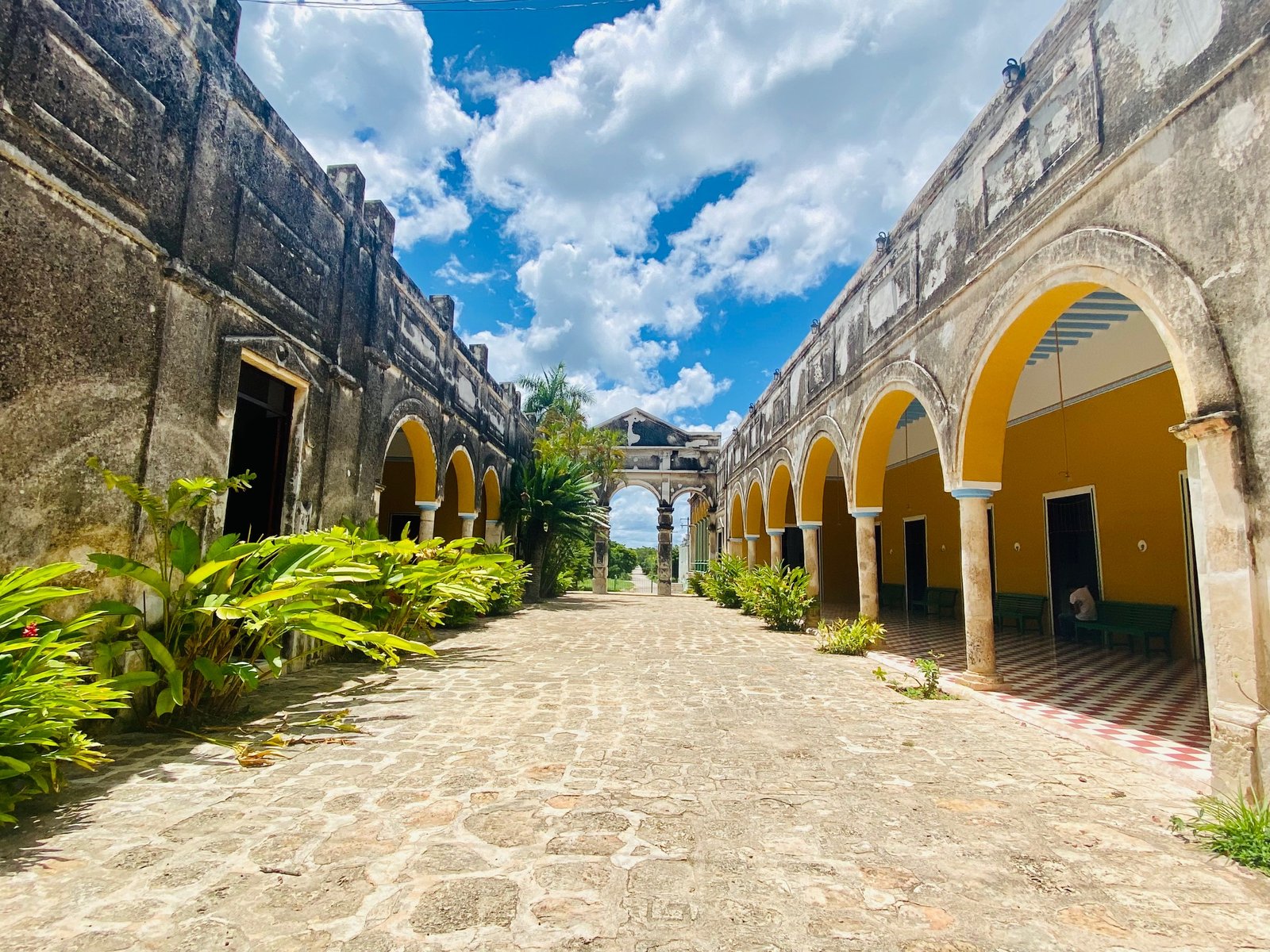
Santa Cruz is the gentler, more atmospheric of the two — colonial opulence you can linger in. The Valentina Restaurant sits on the terrace of the old machine house, overlooking a garden of palms, orange trees, flamboyant, and ancient tropical plants. Technically free to visit, though honestly you’ll want to stay for a meal.
- Location: 20 minutes from Mérida on Calle 86 S/N, Santa Cruz Palomeque, Mérida
- Hours: Daily, 7:00 am to 10:00 pm
- Admission: Free (though you’ll want to order a drink or a meal)
Music and modern culture
Palacio de la Música
The Palacio de la Música is a state-of-the-art museum with eight virtual pavilions covering the history of music from all over Mexico — folk, phonograph, concert, big band, cantina, and current music, each presented in its own interactive setting. Bring headphones-ready curiosity; this one rewards a slow visit.
- Location: Calle 58 x 59
- Hours: Daily, 10:00 am to 6:00 pm
- Admission: $
Planning your visit: tips from an insider
A few things I’ve learned from taking visitors around:
Monday is a tough museum day — several are closed or on reduced hours, so plan accordingly. If you can, pair Centro museums (Casa Montejo, Governor’s Palace, Mérida City Museum) into one morning since they’re walkable, and save Paseo de Montejo for an afternoon with cold drinks built into the plan. Mérida heat is real, and museum-hopping in July feels very different from museum-hopping in January.
If you’re visiting between April and September, do your museum stops between 9 and 11 am or after 5 pm. Your future self will thank you.
Final thoughts on museums in Mérida Mexico
These are just the museums I’d send a friend to first. Honestly, you can find historical artifacts and architectural details all over the city — not just inside museum walls. Over the last twenty years, Mérida has attracted a small but growing group of artists, collectors, designers, and antique dealers who’ve brought a creative energy that, combined with the gastronomic scene, the restored colonial architecture, and the proximity to incredible beaches, has pushed the city squarely into modern times while keeping its soul intact.
These Mérida Yucatán cultural attractions are a great starting point whether you’re here for a long weekend or considering a move. If you want more to round out your trip, see our Guide to Mérida Mexico on a Budget and Top 100 Things to Do in Mérida for the full picture.