Skip to content
Going to a Mérida Mexico Hospital? Here’s How the System Actually Works
When I moved to Mérida from Dallas at the end of 2019, I had two assumptions about Mexican healthcare. First, that it would be cheaper than what I was used to. Second, that “cheaper” probably meant “lower quality.”
I was right about the first thing. I was completely wrong about the second.
What nobody told me — and what I want to tell you now — is that the system itself works differently than what we’re used to back home. Not worse. Not better. Different. And if you walk into a Mérida Mexico hospital expecting it to operate like the one in your old neighborhood, you’ll get frustrated, you’ll probably overpay, and you may end up at the wrong facility for what you actually need.
This guide is everything I wish someone had handed me before my first appointment, my first ER visit, and the first time I had to choose between a clinic and a hospital for the same procedure. (Yes, you usually have a choice. And the price difference is real.)
I’m not a doctor, and nothing here is medical advice. I’m a foreign resident who’s been using and navigating this system since 2019, sending friends to specialists, sitting with neighbors in waiting rooms, and learning the lessons you’d probably rather skip. Let’s get into it.
📌This article was originally posted on September 3, 2020. It’s now updated for 2026 information as some of the original details were out of date.
The Three-Level Hospital System (and Why It Matters for You)
In Mexico, hospitals are organized into three levels: primer nivel, segundo nivel, and tercer nivel. This is the single most important thing to understand before you need care here, because it’s not a quality ranking — it’s a scope ranking.
A first-level hospital isn’t worse than a third-level hospital any more than a Toyota Corolla is worse than a Toyota Land Cruiser. They’re built for different jobs. Once you understand which level does what, choosing where to go stops feeling like a guess.
Hospital de Primer Nivel (First Level)
These are facilities for non-emergency, non-specialist care: routine consultations, basic monitoring, first aid, simple lab work. Many are teaching hospitals. If you walk in with something serious, they’ll stabilize you and refer you up the chain.
For most living in Mérida proper, primer nivel facilities aren’t where you’ll spend much time — but they matter if you live in one of the smaller pueblos outside the city.
Hospital de Segundo Nivel (Second Level)
This is the workhorse tier. Second-level hospitals offer hospitalization in core services: internal medicine, pediatrics, general surgery, maternity, and emergency rooms. They also handle outpatient specialists for things like neurology, cardiology, and orthopedics.
If you need a routine surgery, are giving birth, or need treatment for a manageable specialist issue, a second-level hospital can almost certainly take care of it.
Hospital de Tercer Nivel (Third Level)
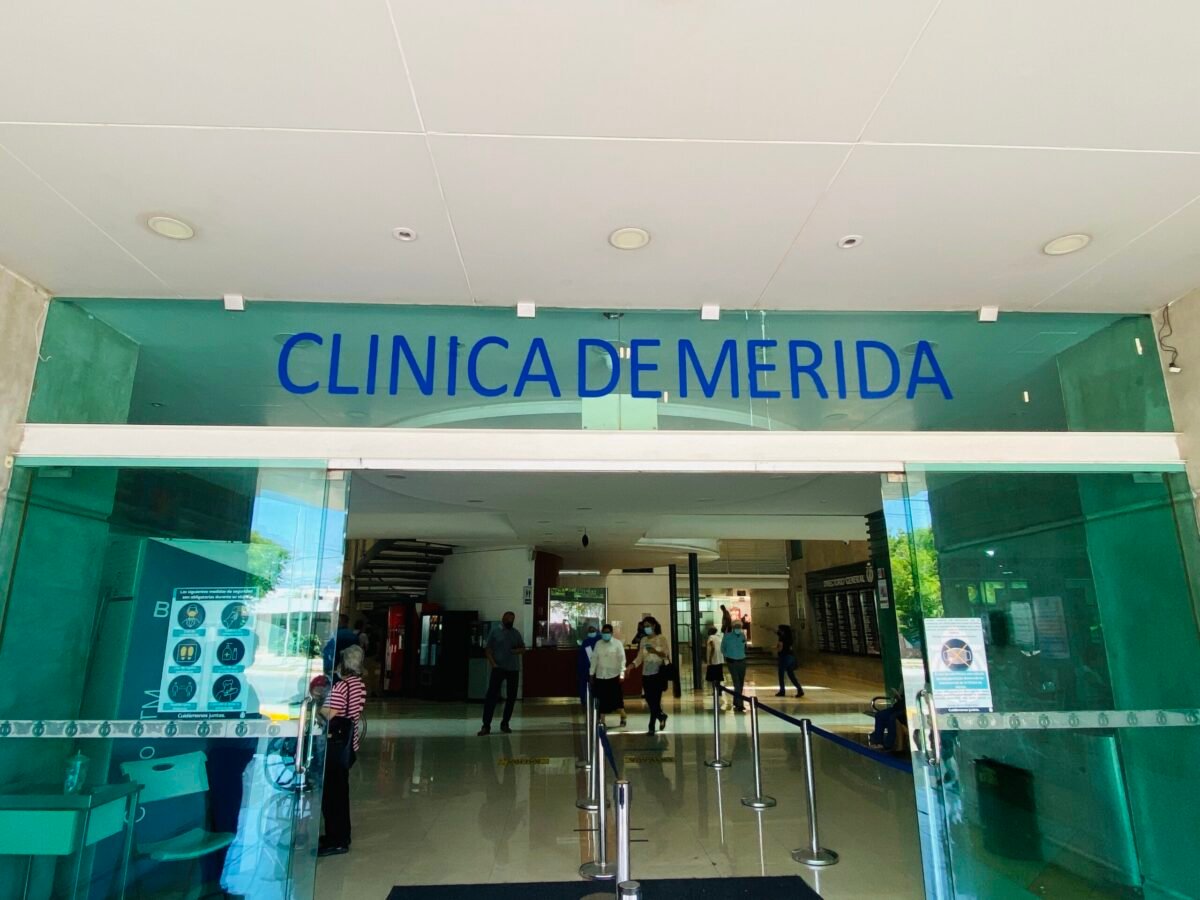
Third-level hospitals are the high-complexity facilities. ICUs, coronary units, cardiovascular surgery, neurosurgery, transplants, advanced oncology — this is where the most serious cases go, and the equipment is genuinely state of the art. Most of Mérida’s well-known private hospitals (Faro del Mayab, Star Medica, Clínica de Mérida) are tercer nivel.
For the most specialized services you may need a referral from a second-level facility, but you can walk into a tercer nivel ER directly.
Local Tip: If a Mexican friend or doctor tells you to go to a clínica for a procedure, don’t assume that means a lesser facility. A specialty clinic in Mérida often has the same surgeon, the same equipment, and the same recovery room as a tercer nivel hospital — at a meaningfully lower price. More on that in the next section.
Hospital vs. Clinic: The Decision That Can Save You Thousands
Here’s something that surprised me coming from the U.S. The Mexican healthcare model is quite different. In Mérida, you usually have a choice about where your procedure happens. And the choice can change the bill significantly.
In the States, if your doctor says you need gallbladder surgery, you go where your insurance sends you. Done. In Mérida, the same surgeon often operates at two or three different facilities — a tercer nivel hospital, a segundo nivel hospital, and a specialty clínica. The procedure is identical. The surgeon is identical. The price is not.
There are close to twenty specialty clinics in Mérida offering surgical and recovery services. Unlike a second-level hospital, a clinic typically focuses on a single area: obstetrics, oncology, ophthalmology, orthopedics, and so on. They do that one thing — and they do it well, often with the same equipment and the same doctors you’d find in the bigger hospitals.
So when your doctor recommends a procedure, the question to ask is simple:
“¿Dónde puede realizar el procedimiento, y cuál es el costo en cada lugar?” (Where can you perform the procedure, and what does it cost at each location?)
Most doctors will quote you both options without hesitation. Some patients prefer the larger hospital because of the 24-hour emergency backup if something goes wrong during recovery. Some prefer the clinic for the lower price, the smaller environment, or the more focused specialty staff. There’s no wrong answer — but there is a wrong move, and that’s not asking the question at all.
Local Tip: Doctors in Mérida are usually affiliated with specific clinics where they have admitting privileges, the same way they are with hospitals. If you go the clinic route, your doctor will recommend the one they trust most. That recommendation is worth listening to — they know the staff, the equipment, and which clinics handle complications well.

What to Actually Expect When You Walk In
The first time you go to a hospital or clinic in Mérida, a few things will likely surprise you. None of them are bad. They’re just different.
Bring your passport or residency card. Every facility, public or private, will ask for ID. If you have a Temporary or Permanent Resident card, that’s what they want. Tourists should bring a passport. They’ll also want a phone number where you can be reached and an emergency contact.
Bring your medical history — in writing. This is the single most underrated piece of advice I can give you. Doctors here are excellent, but they don’t have access to your records back home, and getting them transferred can take days or weeks you don’t have. Carry a one-page summary of your conditions, medications (with dosages), allergies, surgeries, and your primary care doctor’s contact information. If you take meds, photograph the pill bottles. I keep mine in a notes app on my phone and a printed copy in a binder I take with me.
Expect the appointment to actually start on time. This is genuinely a delight. Specialists in private practice or in private hospitals run on schedule, in my experience. If your appointment is at 10:00, they will see you at 10:00.
Expect the consultation to last longer than you’re used to. A specialist visit here often runs 45 minutes or longer. Doctors take a full history, examine you carefully, and answer your questions. If you’ve been used to the seven-minute U.S. doctor visit, this will feel like a different planet.
English varies by doctor and by facility. Many specialists at private hospitals do speak English — particularly at Faro del Mayab, Star Medica, and Clínica de Mérida. Some don’t. If your Spanish is shaky, ask when you book whether the doctor speaks English, or bring a bilingual friend. Translation apps work in a pinch but can mangle medical terminology.
Local Tip: Hospitals here use what we’d call admitting doctors — your specialist sees you in their office, and if you need a procedure, they perform it at one of the hospitals or clinics where they have privileges. This means your “doctor” and “hospital” are not bundled the way they often are back home. Choose your doctor first, then ask where they operate.
Paying for Care: Insurance, Cash, and Your Rights as a Patient
This is the part that catches the most foreign residents off guard, so I want to be very clear about it.
Almost all medical care in Mérida is paid up front, in cash or by credit card, at the time of service. This applies to public and private facilities alike. Doctors, hospitals, labs, pharmacies — all of them.
What this means in practice: if you’re hospitalized and you have U.S. insurance, the hospital is generally not going to bill your insurer for you. You pay the bill, you get an itemized receipt, and you submit that receipt to your U.S. carrier for reimbursement under whatever international-care provisions your policy includes (if any). I have personally heard stories — and so have others who’ve been here a while — of U.S. patients being held at the hospital until the bill is paid in full. Don’t let this happen to you. Either come prepared to pay or have a Mexican insurance policy the hospital will accept directly.
Medicaid will not cover you here. Full stop. They don’t cover care outside the United States.
Medicare may cover you here ONLY if you have a specific type of policy. If you’re moving to or spending significant time in Mérida and you’re relying on Medicare back home, you need a separate plan.
A Mexican health insurance policy is genuinely affordable — much more so than anything comparable in the U.S. — and many private hospitals in Mérida have direct-billing relationships with major Mexican insurers. If you’re moving here, this is one of the first things to set up. I’ve written about how foreign residents can get insured in Mexico over here: Health Insurance in Mexico. AMEXCARE is one of the brokers I trust to walk people through their options.
Travel insurance is a different animal, and if you’re visiting rather than living here, you want a policy that explicitly covers medical evacuation. Air ambulance service back to the U.S. or Canada can run into six figures, and most standard travel policies don’t include it. Read your policy. Get a 24/7 emergency number from your carrier and put it in your phone before you leave home.
Know about PROFECO. If you ever feel a Mérida Mexico hospital or provider has charged you unfairly, the Mexican government’s consumer-protection agency, PROFECO, takes complaints from foreigners and acts on them. You can reach them at 01-800-468-8722 (ask for an English-speaking operator) or at profeco.gob.mx. I’ve never personally needed to file a complaint, but knowing the resource exists is part of feeling like you have agency in the system.
Local Tip: Always — always — ask for an itemized bill. Don’t accept a single line item that says “Hospitalization: $X.” You want a breakdown of the room, the medications, the surgical fees, the lab work, and the supplies. This protects you, it’s required for any U.S. insurance reimbursement, and it’s also how you’d build a PROFECO case if you ever needed to.
In an Emergency: What to Do, Where to Go
The middle of an emergency is a bad time to figure out where the nearest hospital is. Do this now, before anything happens.*
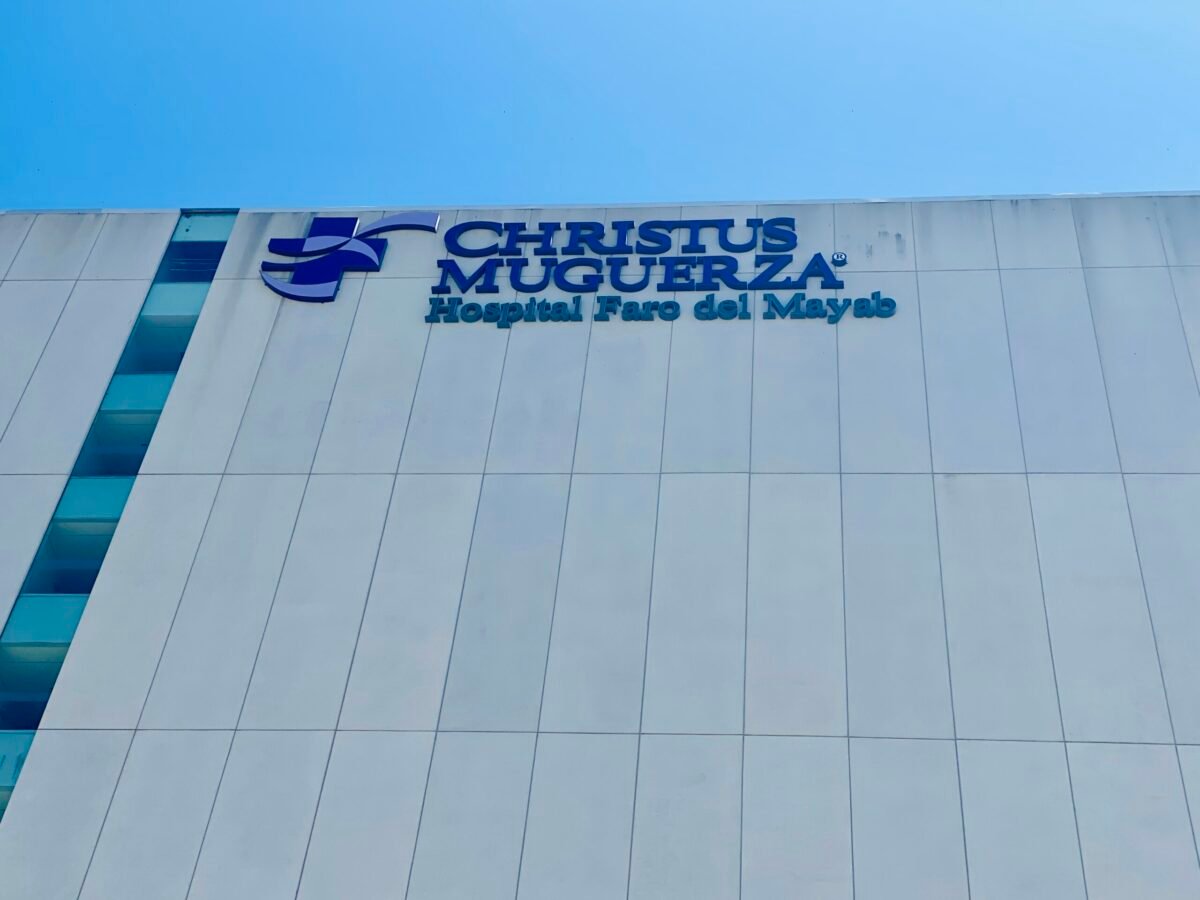
Sit down with Google Maps and pin a hospital in Centro and a hospital in the North. In Centro, we recommend Clínica de Mérida. In the North, we recommend Christus Muguerza Hospital Faro del Mayab. Do the same for wherever you stay when you travel.
How 911 really works. The general emergency number in Mexico is 911. But, it does NOT work the same way it does in the U.S. 911 is required to have English speakers on staff BUT it may take 10, 20, 40 minutes or more to actually get them on the call. Once you make your report, 911 dispatches the police. When the police arrive and assess the situation, they are in charge of calling the ambulance who will take you to the nearest hospital, which may or may not be the one you want.
Private ambulance services are available and affordable. Response times for private ambulance services are often faster. Star Medica, Faro del Mayab, and Clínica de Mérida all operate their own ambulance services. Save those numbers in your phone.
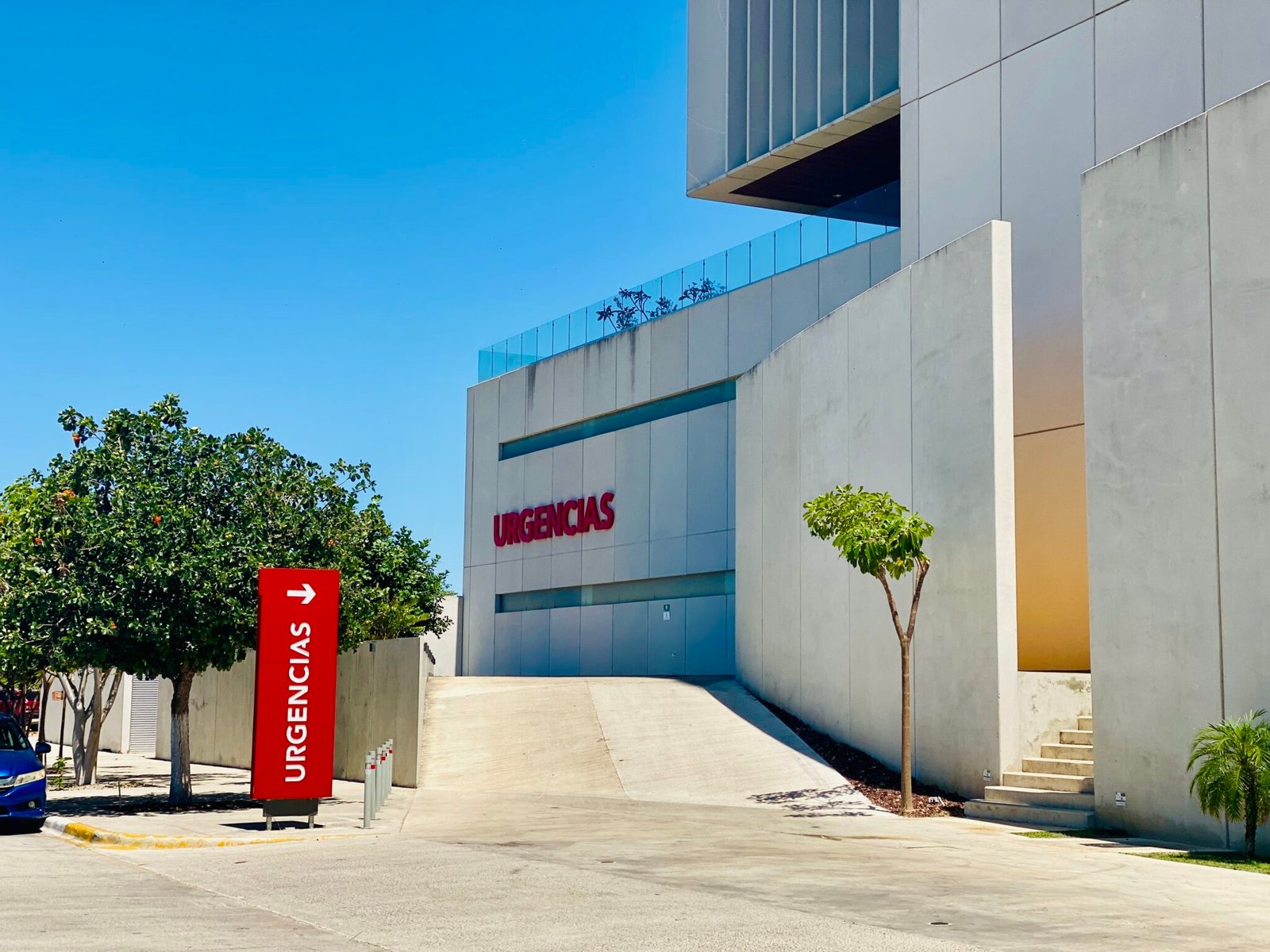
The word for emergency room is Urgencias. That’s what’s on the sign. It’s also worth knowing that urgencias is where you go for anything urgent but not life-threatening — a high fever, a deep cut, a broken bone. You don’t need an appointment. Walk in, register, and get triaged.
You don’t need insurance to be seen. Private hospitals in Mérida — Star Medica, Clínica de Mérida, Faro del Mayab, CMA — will treat anyone who can pay. A foreign passport is not a barrier. The bill is generally smaller than what you’d pay out of pocket back home for the same emergency, but bring a credit card with a high enough limit to handle whatever’s needed.
Local Tip: Health Itinerary offers an affordable monthly membership we recommend that can be the difference between a disaster and getting you where you need to go in an emergency. For a no-obligation quote, fill out THIS FORM to start the process. Health Itinerary also offers travel insurance.
Mérida Private Hospitals Short List
This is not an exhaustive list of every hospital in the city. It’s the short list of facilities, organized by the situation each one tends to be best suited for.
Hospital Faro del Mayab (Christus Muguerza)
Phone: +52 999 689 4500 Location: Calle 24 s/n x 7 y 7A, Col. Santa Gertrudis Copó (97115) Level: Tercer nivel Website: christusmuguerza.com.mx
The newest of Mérida’s major private hospitals (opened 2019) and the one most explicitly oriented around international patients and medical tourism. Part of the Mexico City–based Médica Sur Network, which has a strategic alliance with the Mayo Clinic in the U.S. The facility is genuinely beautiful, with patient rooms designed to bring natural light and outdoor views inside. If you want the closest thing to a U.S.-style hospital experience, this is it.
Best for: Planned procedures where international certifications matter, foreign residents who prioritize English-speaking infrastructure, English-speaking doctor appointments.
Insider Tip: Our #1 choice – this hospital is the closest facility we think of in comparison to a U.S. hospital. If you’d like to schedule a tour, email me and we will set it up for you: amy@lifeinmerida.com
Star Medica
Phone: +52 999 930 2880 Location: Calle 26 #199 x 15 y 7, Col. Altabrisa (97130) Level: Tercer nivel Website: starmedica.com
Part of a national Mexican hospital chain. Specialists’ offices on the upper floors, hospital below, responsive ER with some English-speaking doctors. Increasingly familiar with foreign patients, including those who have moved here from the U.S. and Canada.
Best for: North-side residents, serious or complex care, situations where you want a hospital network with locations elsewhere in Mexico.
Clínica de Mérida
Phone: +52 999 942 1800 Location: Av. Itzáes #242, Col. García Ginerés (97070) Level: Tercer nivel Website: clinicademerida.com.mx
Founded by a group of doctors and grown into one of the most comprehensive hospitals in the city. For anyone living in Centro or Centro-adjacent neighborhoods, this is the closest tercer nivel emergency facility. Many of the doctors speak English, and they’re experienced with foreign residents.
Best for: Foreign residents in Centro and surrounding neighborhoods, comprehensive specialist care, ER access without driving north.
Insider Tip: Our #2 choice – this hospital is the closest in Centro. We recommend visiting the ground floor and offices to get a feel for the hospital.
Centro de Especialidades Médicas (CEM Sureste)
Phone: +52 999 920 4040 Location: Calle 60 #329-B x 35, Centro (97000) Level: Segundo nivel Website: cemsureste.com
A smaller hospital with doctors’ offices, an ER, and the core specialty services you’d expect. Conveniently located in Centro, walking distance from Fiesta Americana, NH Collection, City Express Plus, Villa Mercedes, and across the street from the Hyatt Regency.
Best for: Tourists and short-term visitors staying in Centro, walk-in care, situations that don’t require tercer nivel complexity.
Centro Médico de las Américas (CMA)
Phone: +52 999 926 2111 Location: Calle 54 #365 x 33A y Avenida Pérez Ponce, Centro (97000) Level: Segundo nivel Website: centromedicodelasamericas.com
Founded in 1984 and affiliated with Mercy Hospital in Miami. One of the longer-established private hospitals in the city, with a strong specialist roster and a loyal local patient base.
Best for: Patients who value an established Mérida pedigree, specialist consultations, comprehensive care without the size of the big tercer nivel facilities.
Local Tip: Most residents I know end up developing a relationship with one specific hospital based on their comfort level and where their doctors have priveleges. Best practice: choose 2 – one in Centro and one in the North. Remember that the “best” hospital for you may not be the closest. Prioritize your familiarity with hospitals as soon as you can after you move.
Mérida Public Hospitals Short List
Hospital Regional de Alta Especialidad
Phone: +52 999 942 7600 Location: Calle 7 #433 x 20 y 22, Fracc. Altabrisa (97130) Level: Tercer nivel (public)
A government-run, highly specialized hospital with subsidized services for those enrolled in the public health system. Cardiovascular and pulmonology, neuroscience, hematology and oncology, transplants, adult and pediatric ICU.
Best for: Patients enrolled in IMSS – Mexico’s public health system, highly specialized cases.
Hospital General “Dr. Agustín O’Horán”
Phone: +52 999 930 3320 Location: Av. Itzáes x Av. Jacinto Canek s/n, Centro (97000) Level: Tercer nivel (public)
The historical heart of public medicine in Mérida — inaugurated in 1906 and still anchoring the public system here. A teaching hospital that handles referrals from first- and second-level facilities and runs many state-level health programs.
Best for: Patients in the public system IMSS, complex cases referred from lower-level facilities.

Finding a Specialist (Without a Stale List)
I’m deliberately not giving you a long list of named specialists, because doctor lists go out of date the day they’re published. Doctors retire, change practices, change hospitals, and stop accepting new patients. What I can give you instead is a process that works.
Ask in social media groups — but ask carefully. Facebook groups will produce a flood of recommendations within hours. Take them with calibrated skepticism: a glowing recommendation often reflects the experience the person had as much as the quality of the care. Look for repeat recommendations from people who’ve actually been treated by the doctor for the same kind of issue you have.
Ask your existing doctors for referrals. Once you’re in the system, this becomes the most reliable path. If you have a primary care doctor or a dentist you trust, they know who’s good in every other specialty, and they’ll tell you.
Verify credentials. All licensed Mexican physicians have a cédula profesional (a federal license number). You can look up any doctor in Mexico’s public registry at cedulaprofesional.sep.gob.mx to confirm they’re board-certified in their specialty. This takes 90 seconds and is genuinely worth doing for anyone you’ll be entrusting with a serious procedure.
Doctoralia App. This is a great tool to find doctors and specialists of any kind. You can see patient reviews, hours, if they speak English, and more. The best part is you can make an appointment through the app. Once you register, the app keeps your information for future appointment scheduling.
Why Mérida Is a Medical Hub
Mérida didn’t become a medical destination by accident. It has been a center of medicine in southeastern Mexico for nearly five hundred years.
The first hospital in the city was founded in 1562, just a few decades after the Spanish conquest. By 1640, the Church of la Mejorada was being used as a hospital by Franciscan friars. The School of Medicine was officially founded in 1833 by state decree, and Hospital General “Dr. Agustín O’Horán” was inaugurated by President Porfirio Díaz in 1906 — in the same location it occupies today.
What this long history means for you, practically speaking, is that the Universidad Autónoma de Yucatán (UADY) graduates a steady stream of well-trained physicians, many of whom complete additional training in the U.S. or Europe and return. Mérida is the regional referral center for the entire Yucatán Peninsula — patients from Quintana Roo, Campeche, and Tabasco travel here for the kind of specialty care they can’t get at home.
Mexico is now ranked as one of the world’s top medical-tourism destinations, and the Yucatán is consistently ranked as one of the most successful states in Mexico on health, education, and safety indicators. None of that is marketing copy. It’s part of why I made Mérida my home.
Final Thoughts
The single biggest mindset shift for foreign residents arriving here is realizing that Mexican healthcare is not a budget version of American healthcare. It’s a different, fully developed system that produces excellent outcomes for the people who learn how to use it.
Learn the levels. Ask whether your procedure can be done at a clinic instead of a hospital. Carry your medical history. Get insurance that actually covers you here. Build relationships with doctors before you need them in a crisis.
If you do those five things, the next time you find yourself thinking “I might need to go to a Mérida Mexico hospital,” it won’t feel like a leap into the unknown. It’ll feel like using a system you understand.
If you want to keep learning what life here actually looks like — the parts the relocation marketing brochures leave out — come find me in our private group: facebook.com/groups/lifeinmerida. For more on the medical school behind much of Mérida’s healthcare infrastructure, see medicina.uady.mx.